
CONFEDERACIES AT WAR
War and warriors
What we know
- In the 1800s the great confederacies — among them Bau, Rewa and Cakaudrove — competed for power.
- Warriors fought with clubs, spears and bows; muskets arriving with traders changed how wars were fought.
On the map
Loading the map…
In the 1800s the great confederacies — among them Bau, Rewa and Cakaudrove — competed for power.
- Bau. In the 1800s the great confederacies — among them Bau, Rewa and Cakaudrove — competed for power.
- Cakaudrove. In the 1800s the great confederacies — among them Bau, Rewa and Cakaudrove — competed for power.
A simple map of the places this chapter names. Coastlines: Natural Earth.
The story
Chiefdoms competed for influence, resources and allegiance. Alliances shifted, and fighting could involve raids, defended settlements and canoe fleets. Clubs and spears were weapons, but finely made clubs also expressed status and spiritual associations.
Cannibalism occurred in some historical ritual and conflict contexts. Its meanings and extent should not be reduced to one explanation, or used to define all Fijian life. Claims that every warrior ate enemies to absorb their power flatten a varied history and require evidence.
In the nineteenth century, imported firearms became another resource within these rivalries. They mattered alongside local leadership, supplies, terrain and allies.
Get a Fiji history photograph every Sunday — free. Sign up
Pictures in this chapter
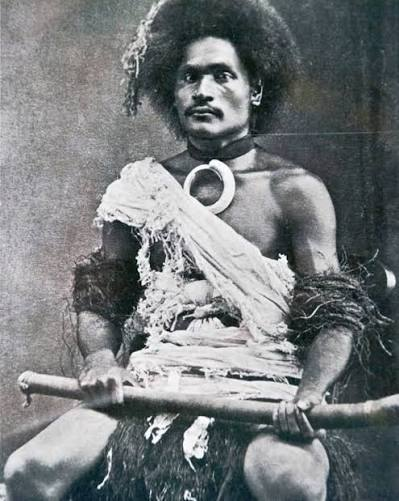 Seated man holding a club — historical portrait supplied to the museum
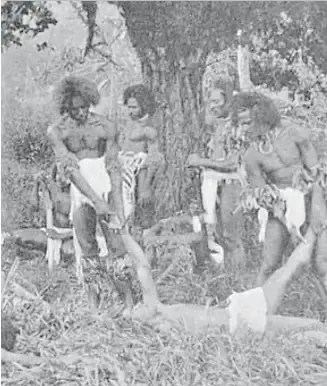 Men of Fiji around a figure lying on the ground — early photograph, probably a staged scene (awaiting cultural review)
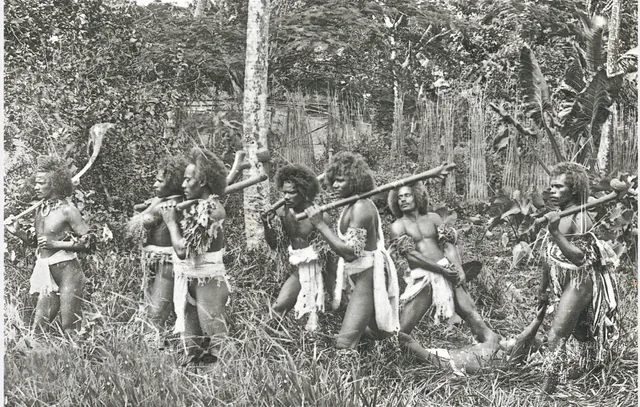 Men carrying clubs, with a figure lying in the grass — early photograph, probably a staged scene (awaiting cultural review)
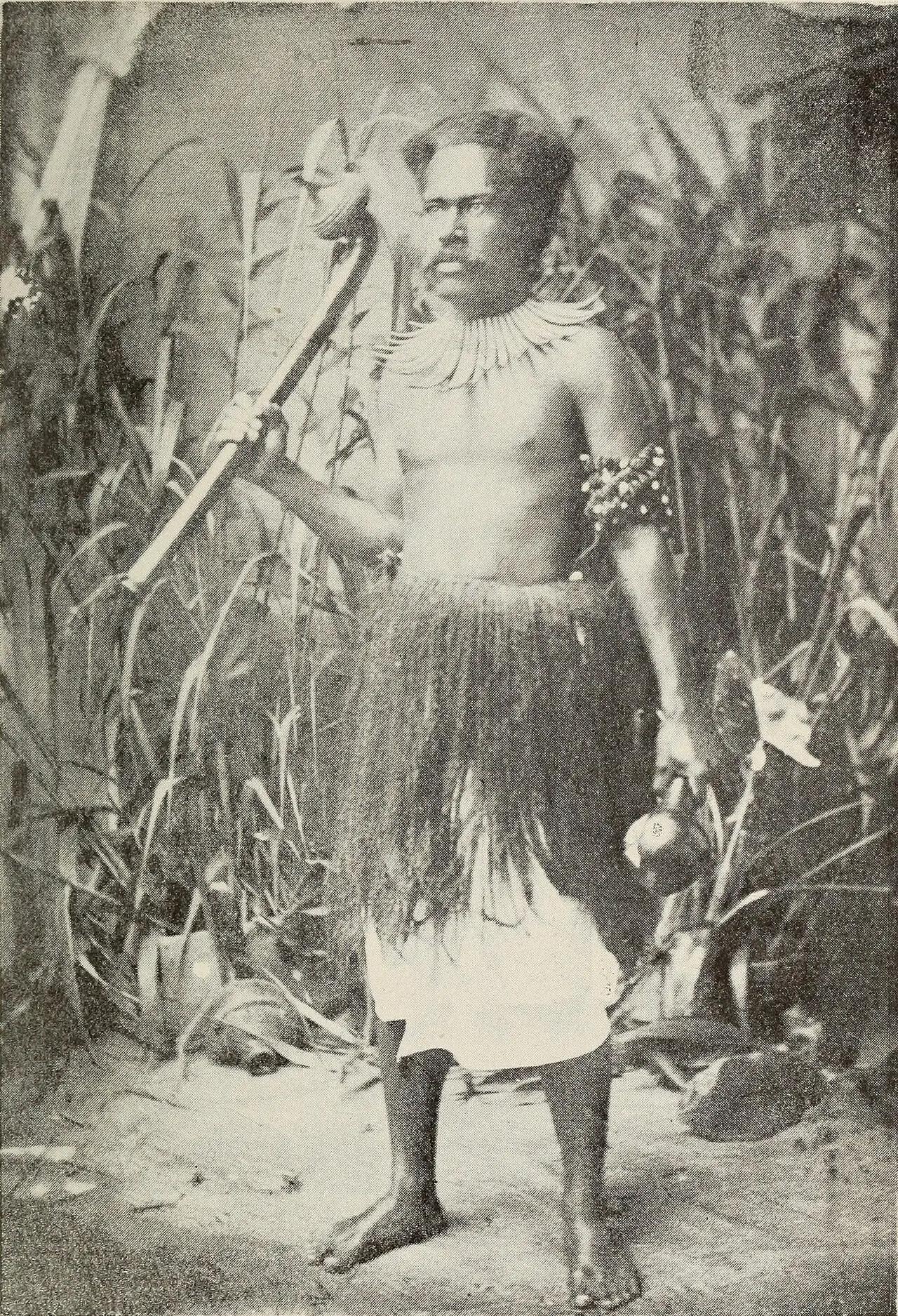 A Fijian warrior. (1900)
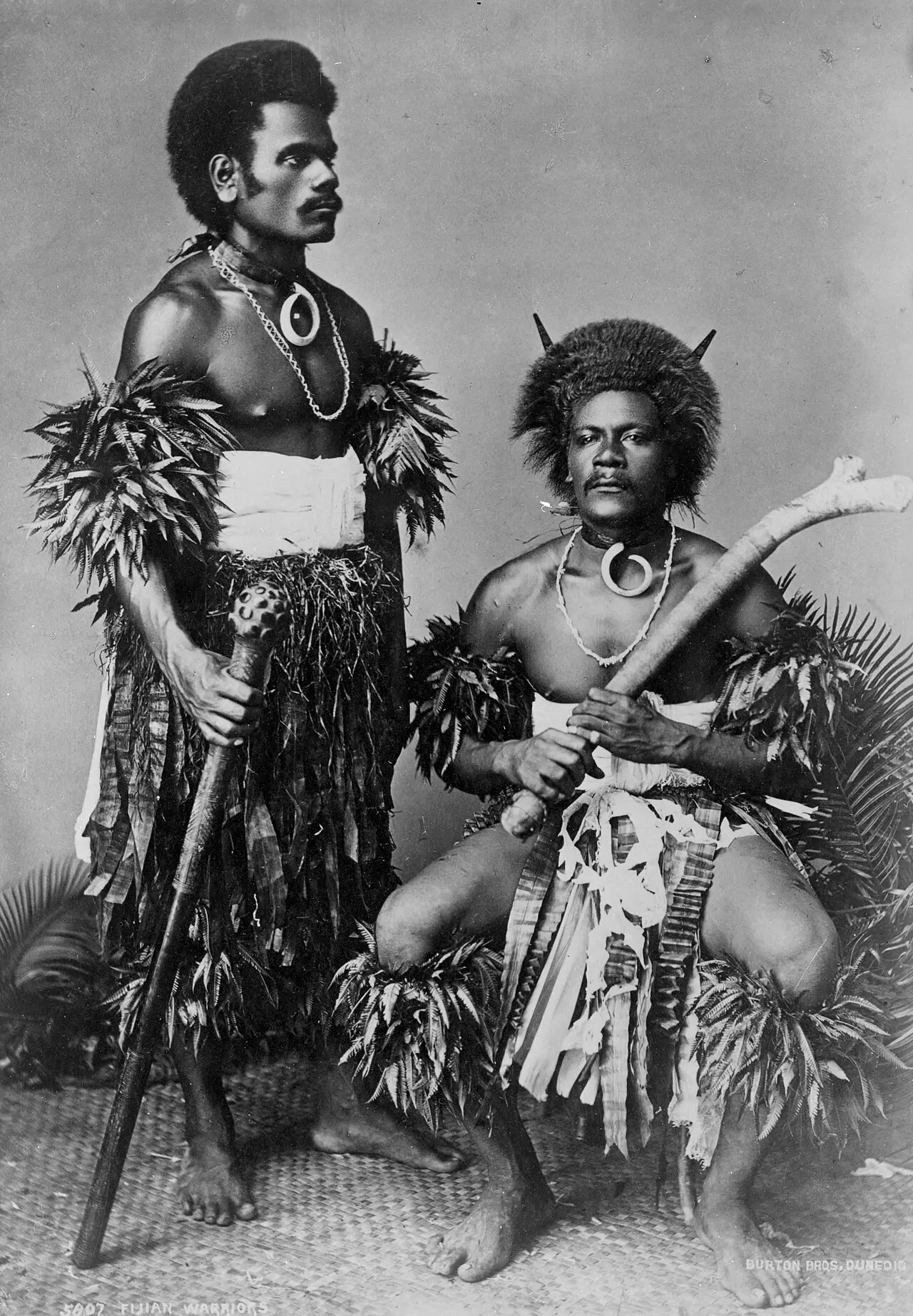 Portrait of two warriors photographed in Fiji in 1884 by Alfred Burton.
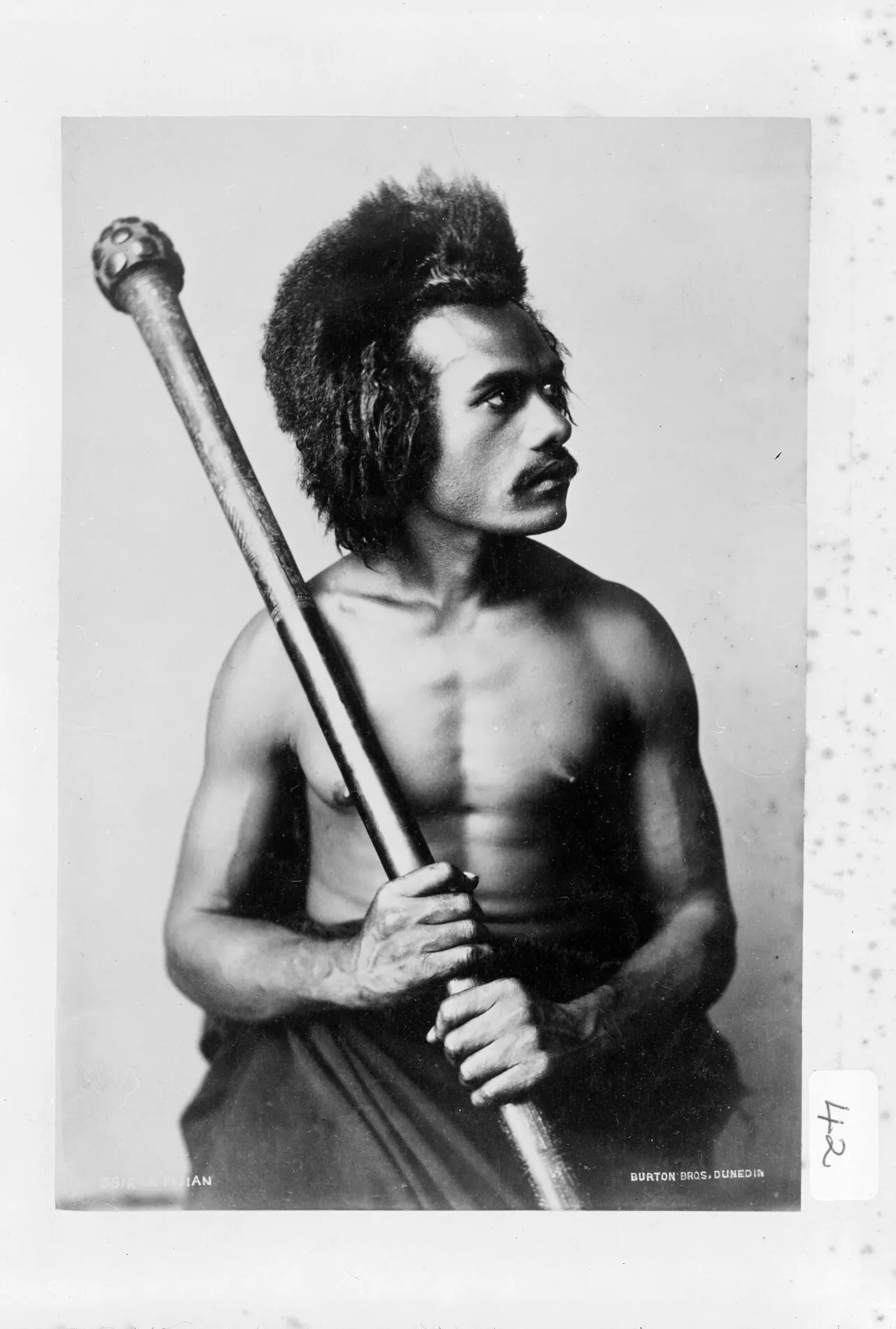 Fijian man holding a club, photograph by Burton Brothers, 1884, b&w negative
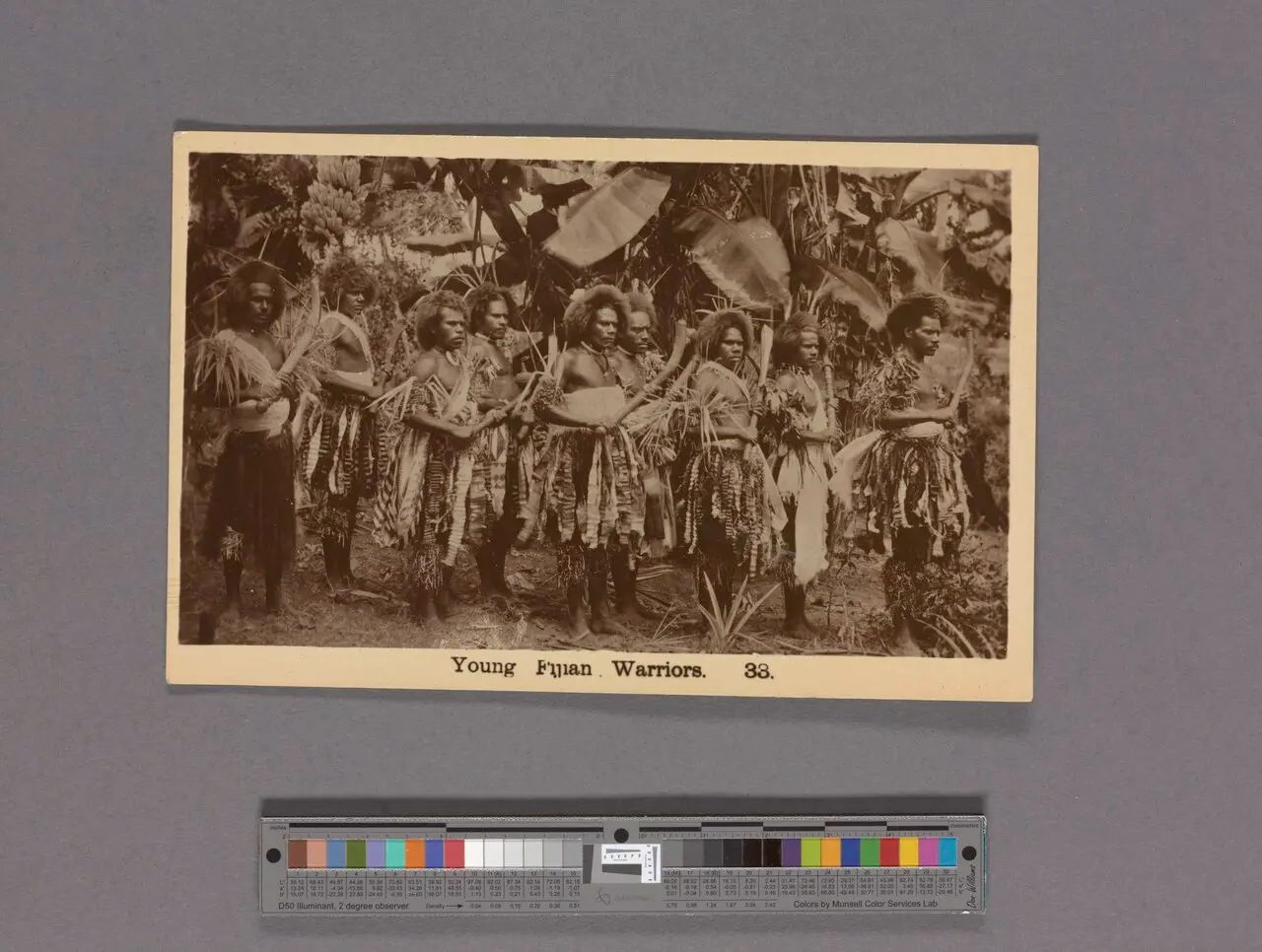 Young Fijian warriors — postcard, Caine series, Suva (1913)
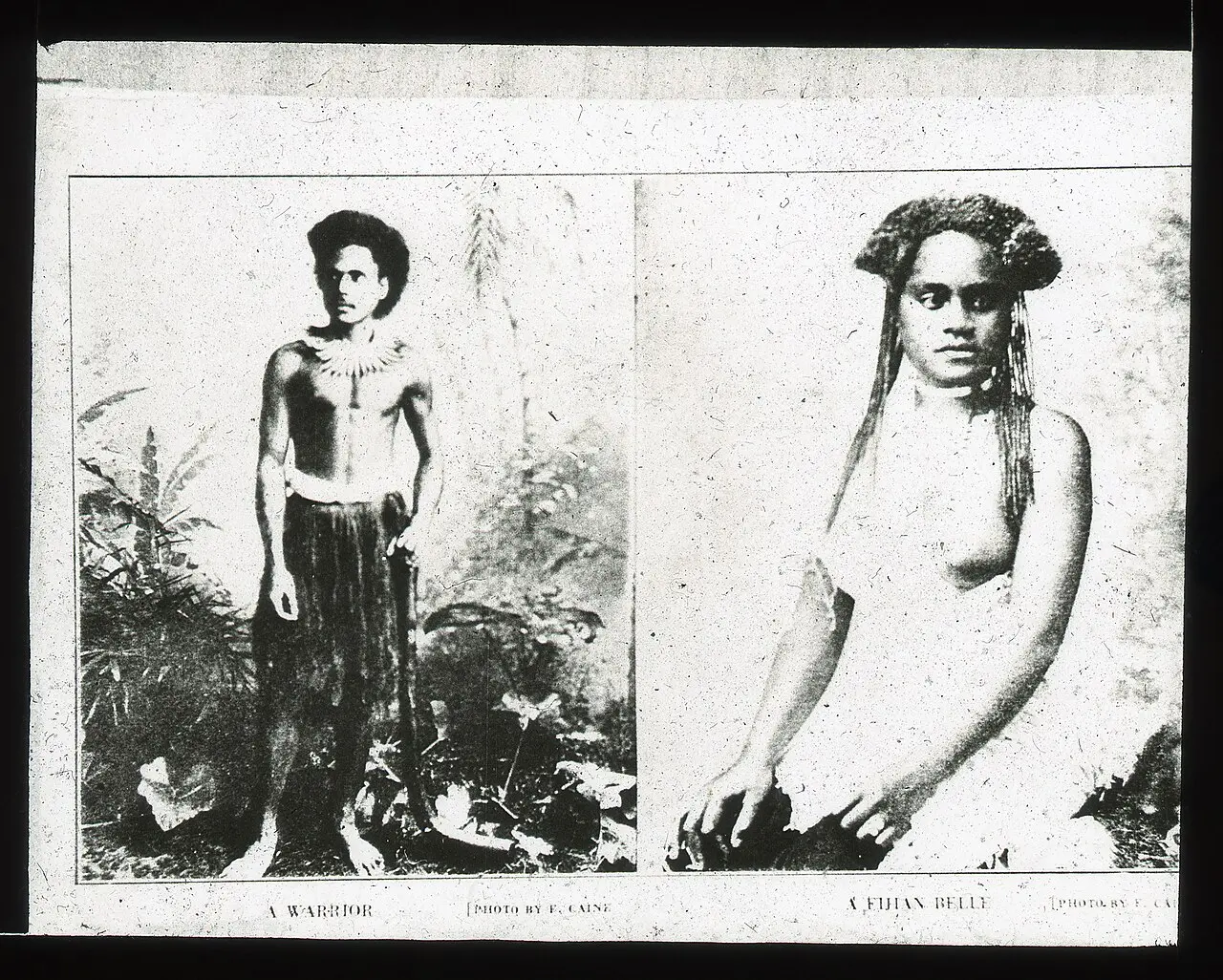 Portraits of a warrior (left) and a young woman (right), Fiji
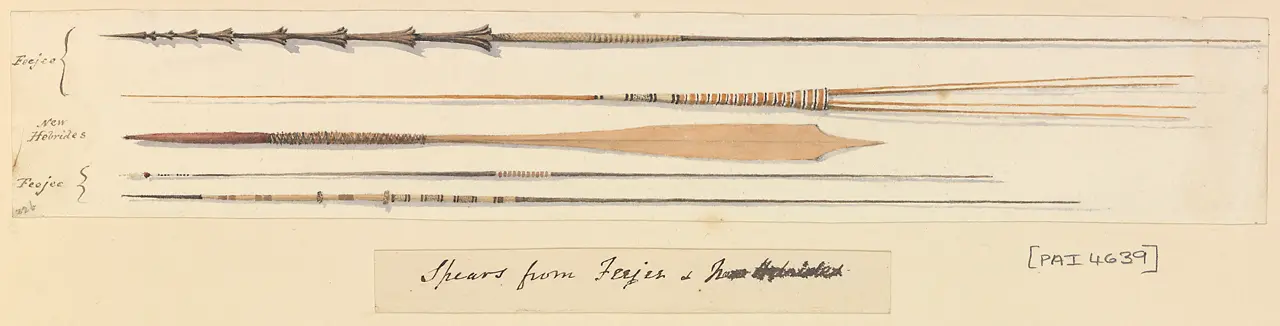 Edward Gennys Fanshawe, Spears from Feejee (Fiji) & New Hebrides (1849)
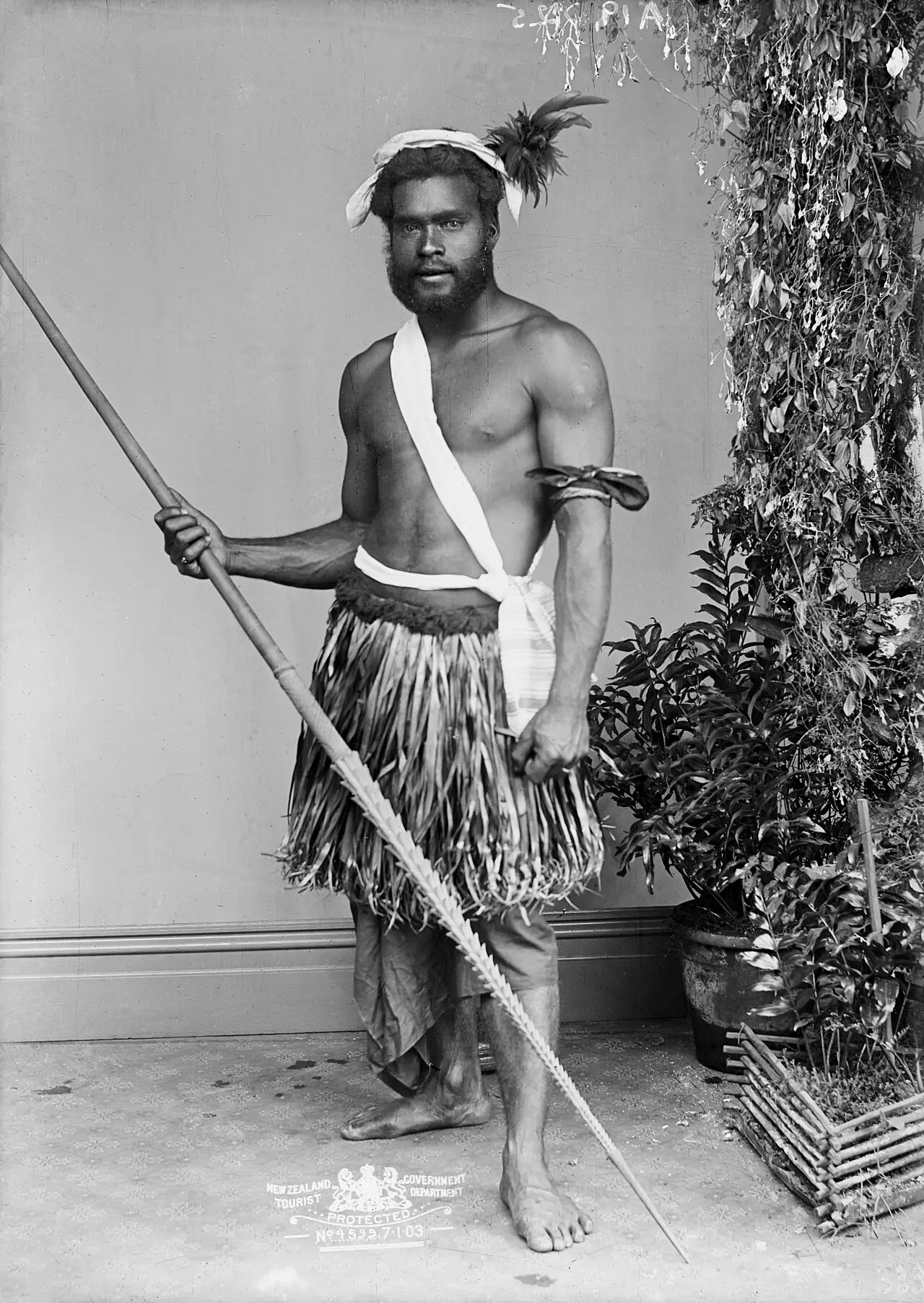 Fijian Islander holding spear (Pulman and Son) (1870)
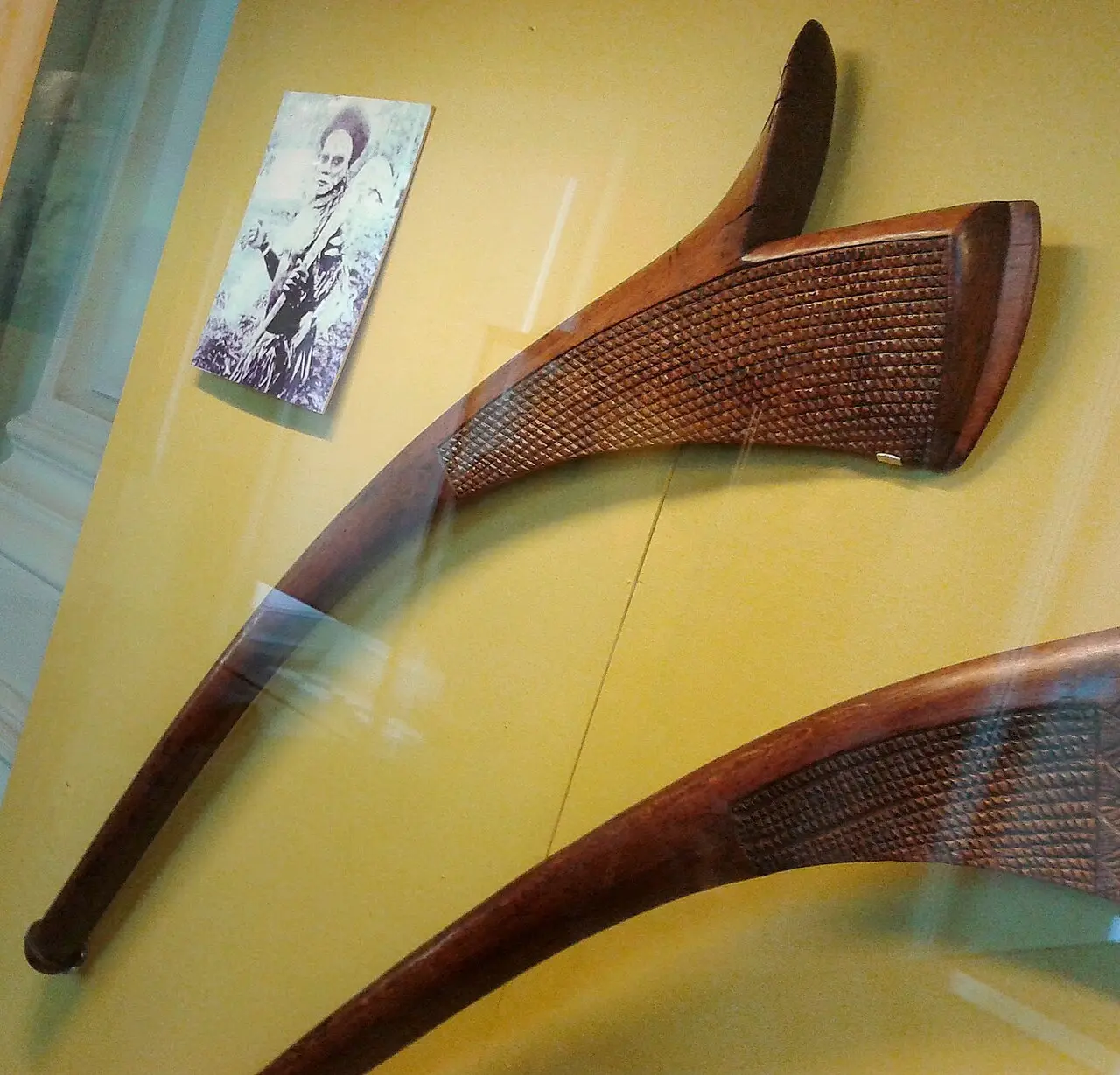 Gata war club from Fiji — Museu Nacional, Rio de Janeiro
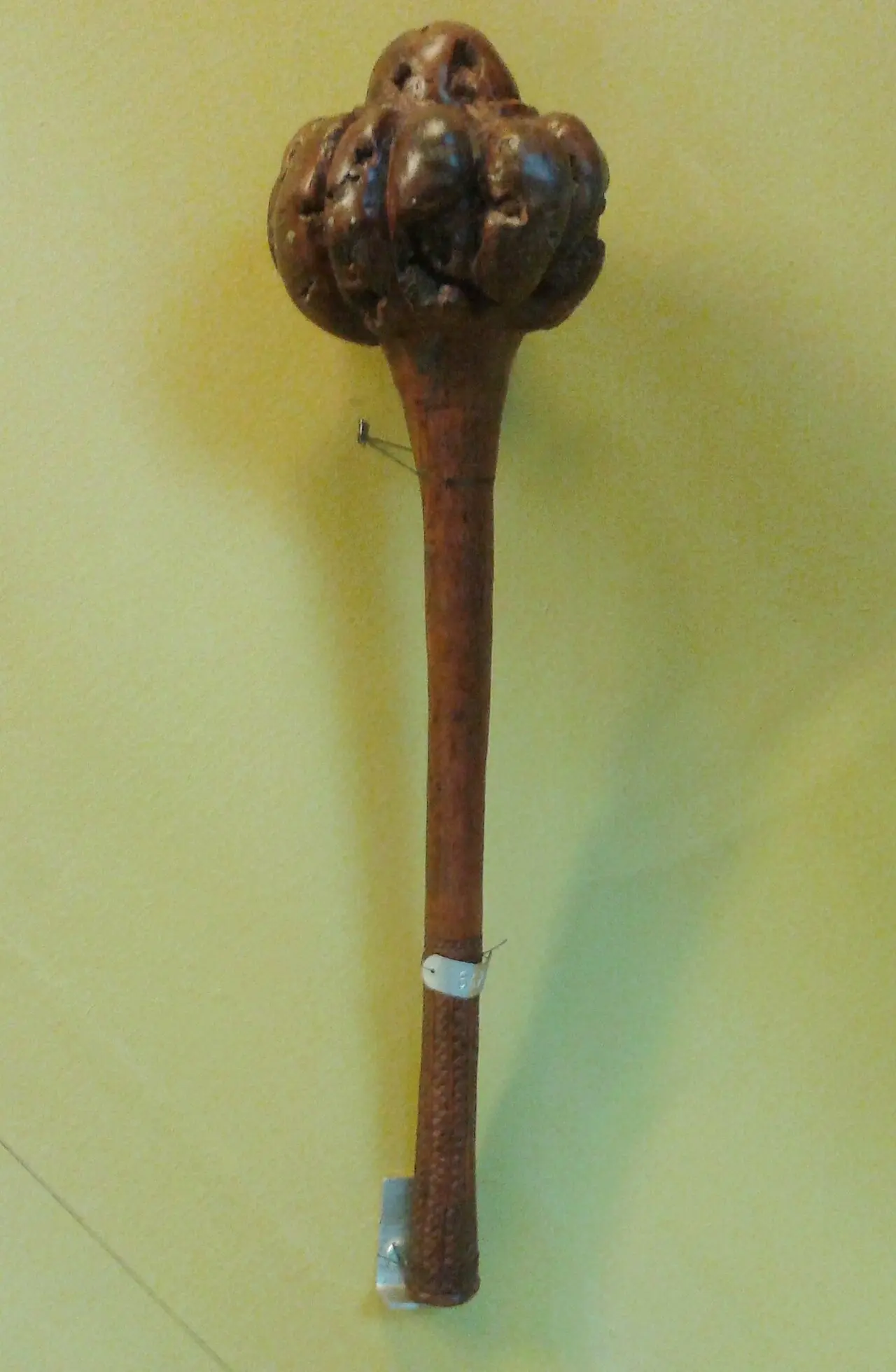 Bulibuli throwing club from Fiji — Museu Nacional, Rio de Janeiro
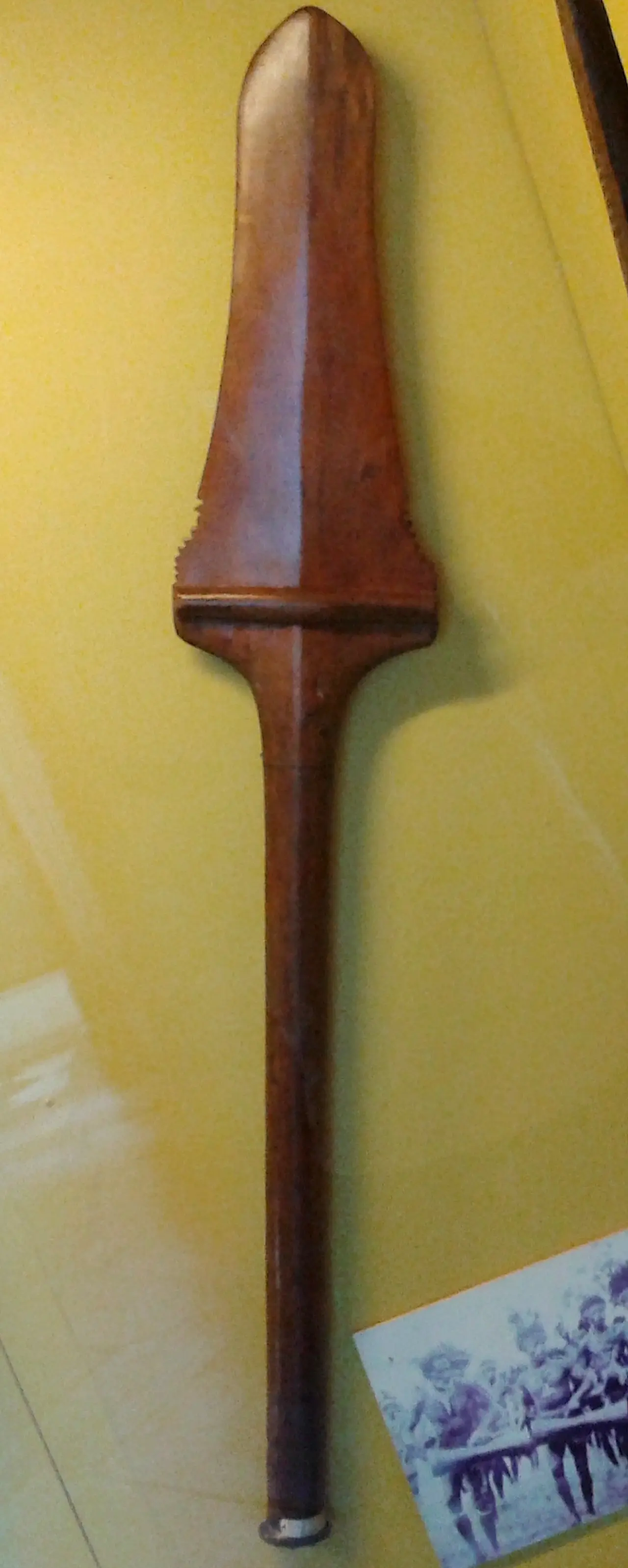 Culacula war club from Fiji — Museu Nacional, Rio de Janeiro
Sources
More in Power and resistance
Tell the museum something
A memory, a correction, or a question. Nothing you send appears on the site. It goes to the museum’s own queue, a person reads it, and they decide. If you teach, know this place, or remember it, your correction is worth more than a compliment.
Holding a longer story — an elder’s, your family’s, your own? Share a story with the museum →
This chapter’s text is awaiting cultural and historical review. Pictures keep the credit and licence of the collection that holds them.